

Nikita Islam
July 10, 2026
You don't realise what bubble you are living in until life introduces you to the realities of the world. This not only opens up your eyes but gives you a clear picture of how privileged you are, and this privilege comes with responsibility too. So, here I am, stepping out of my bubble to try to help some children get out of theirs.
Hi, this is Nikita and welcome to a sneak peak of my journey to the beautiful tea gardens of Sreemangal, which introduced me to a world I was totally unaware of. A world behind the hills, a trap set by the colonizers, which gets hidden by the lush greens and the scenic beauty for more than a century.
A Cup of Tea and 171 Years of Exploitation
Sreemangal is known as the tea capital of Bangladesh. Of course, it is known for its tea gardens, seven-layered tea, hills covered in greenery, the tropical rainforest and the lakes. A perfect spot for a trip, isn't it? A getaway with your friends or family where you get to explore nature and click some "instagrammable pictures" carrying the bamboo basket of tea leaves, wearing the woven straw hat and the outfit of the tea workers. But do you know that this attire, the gardens and nature hide a million untold stories—lives which get strangled in silence?
This is the brutal reality of this world, and we try to escape it by acting blind just to avoid accountability. Let me break it down.
In Bangladesh, tea is a commodity that gets exported in small amounts because we are the biggest consumers of it. Half of the people in our country can't live without tea, as it has become a morning ritual for us and unfortunately, a ritual of 171 years of exploitation of those hands that grew it—exploitation which we all are a part of. With every sip, we take away their freedom to live a life they dreamt of.
Now, a lot of you will come up to me and say, "Should we all stop drinking tea now?" Well, it's not about drinking tea; it's about showing the world their reality, how their jobs cage them and detach them from the outside world.
Your job is supposed to give you financial freedom, open doors for you, fulfill your dreams, and give you a life that you dreamt of. But when you see your job pays an amount which barely gives you enough to live, that is when you realise that it's no longer a job but slavery.
A tea worker spends eight hours a day picking 23 kilograms of tea and earns BDT 178 ($1.45). Yes, that's their daily income, from which BDT 7 is deducted if they collect a little less than the target and the amount they are left with can hardly run a family.
On top of that, the women working in the tea gardens work in the heat, in the rain and even during their periods. Getting their periods costs more than bloating and cramps and for them, sanitary products cost more than a whole day's wage.
When I visited one of the local hospitals to see the medical facilities they offer to the tea community and asked the doctor what women use during their monthly cycles, it left me speechless when he said, "sanitary pads are not available here and moreover, it's not that much needed." Because of this, they are left with no choice but to use old pieces of cloth, which leads to all sorts of infections, which means they miss even more work.
The Story Behind the Hat and the Basket: A Conversation with Geeta Khala
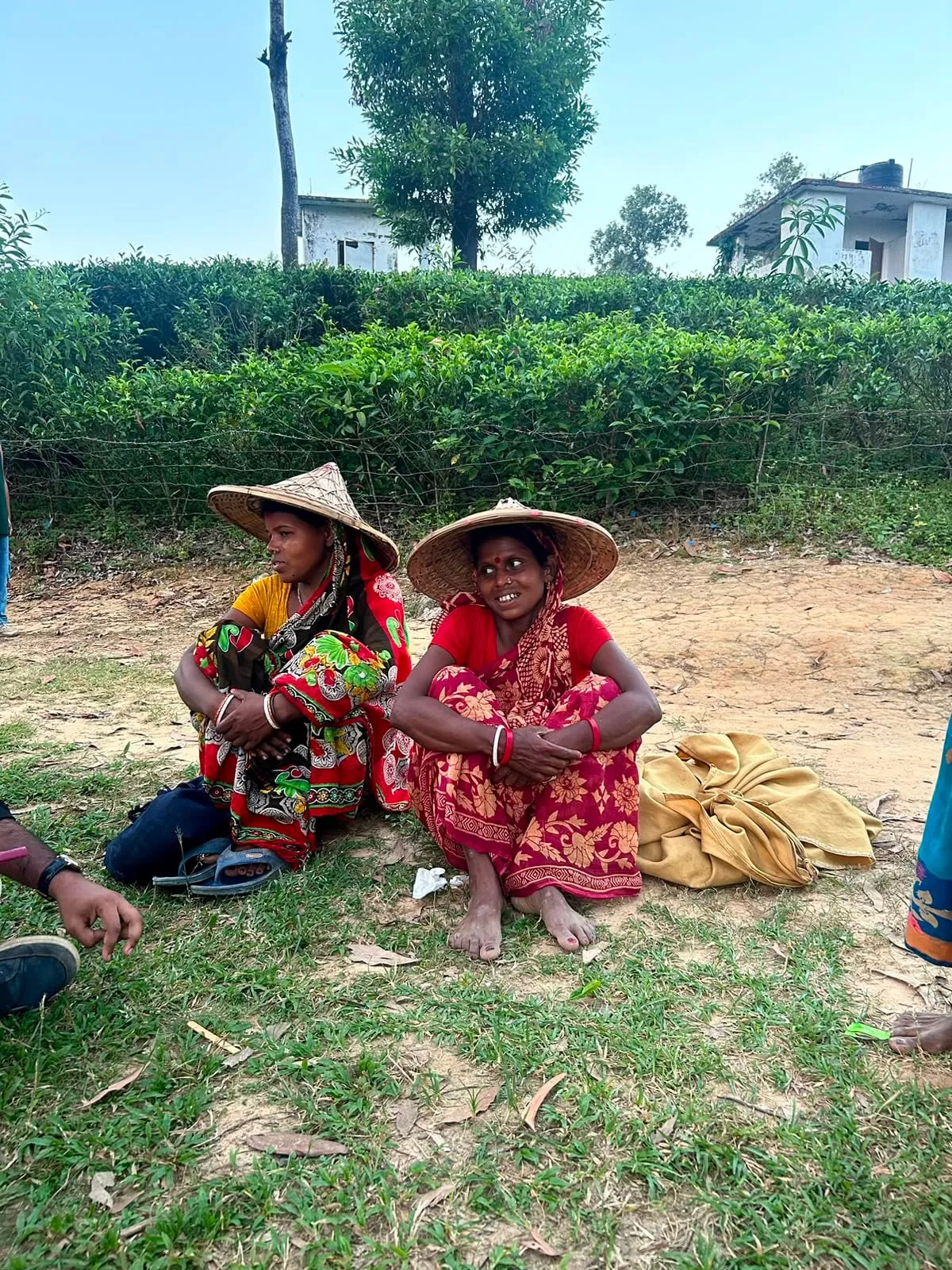
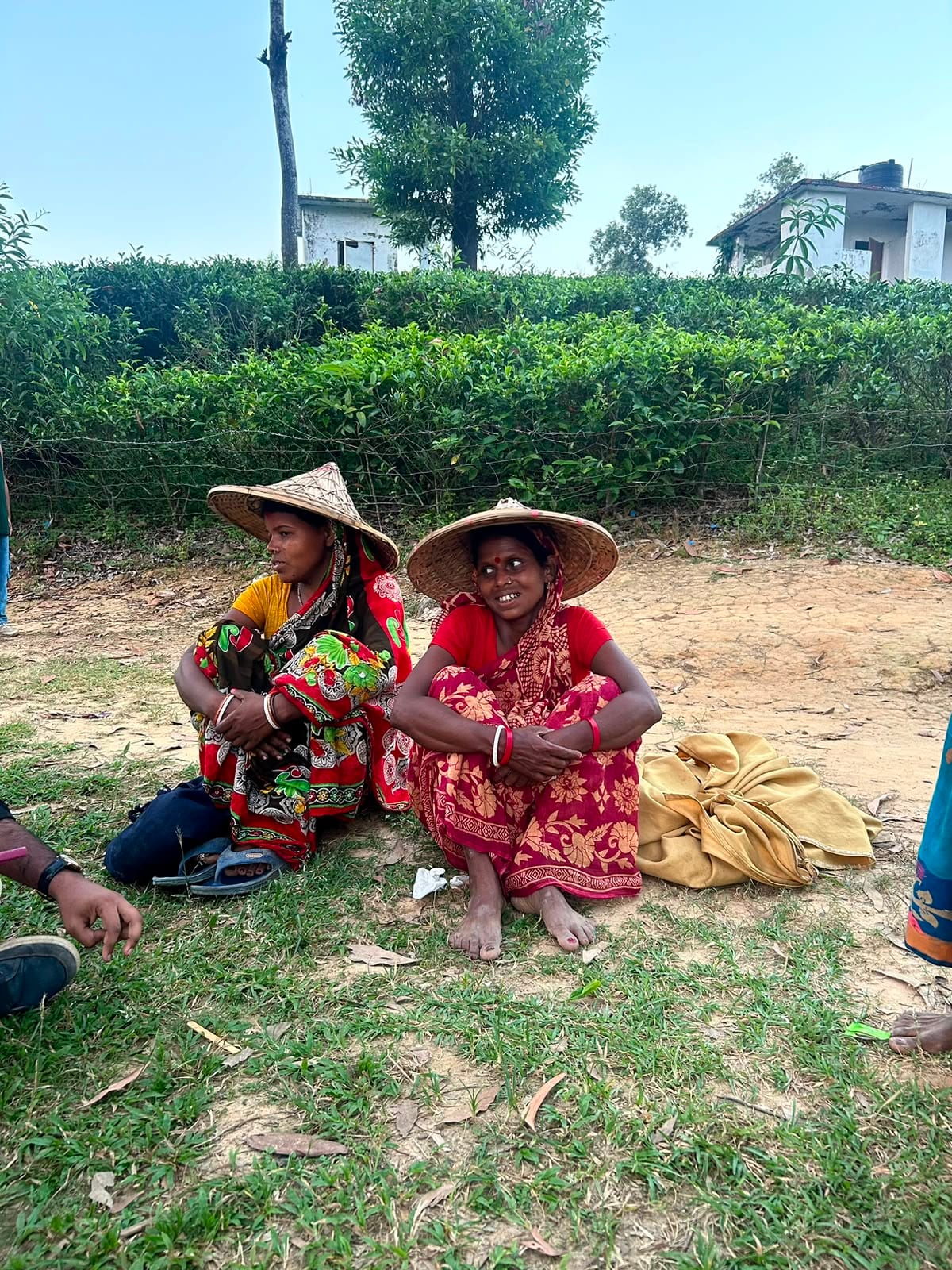
The woven straw hat and the bamboo basket are two of the prominent features of the tea workers. When we visit Sreemangal, we take pictures wearing that hat and carrying the basket, but do we ever think of asking these tea workers about their struggling life or their job when we see them working under the scorching sun?
The sad part is that they don't even expect anybody to ask them because they know nobody is going to be their voice. Their voice was silenced years back and they have accepted their reality.
Maybe that's why Geeta khala thought I was a traveller who just wanted to take a picture wearing her hat.
Geeta khala is a tea worker whom I met while carrying out a survey on the tea workers at the Madhabpur Tea Estate in Moulvibazar District. She put her hat on my head and told me to take a picture and when I told her I wanted to talk to her about her life, her eyes gleamed in silence and her innocent smile filled up her entire face.
She gave me "chapata bhorta" (a dish made of mashed tea leaves with spices) to taste. She was a bit hesitant to offer it to me but still did, with a lot of hope and courage.
At that point, it reminded me of my friend's story of two cups of tea and a loaf, which was a treat from a rickshawala mama and how he made his sad day a memorable one with just his words. He told me that some conversations fill an empty corner of your heart—ones you remember for the rest of your life.
He was right.
Of course, I tried it even though I was already stuffed. I wanted Geeta khala to feel that I am just like her child and I never wanted to make her feel bad by saying no.
She did adore me a lot and shared so many things about her struggling life, just like how my mother spills everything and just wants me to listen without expecting anything in return.
She said that it has been years since her family had any source of protein. Having meat is like a dream to them. They are only dependent on chapata bhorta and roti.
She said this while holding a handful of green tea leaves that she had plucked, her voice trembling in pain.
When I asked her about her children's education, she shared how they couldn't afford it, as they could hardly run a family with their earnings. Her eyes filled with tears and deep remorse.
Education is supposed to be a basic right, but to them, it's a luxury.
Before she left, she gave me a hug, brushed her hands over my hair, adored me and pleaded to do something for them. Her basket tied to her back felt less heavy compared to the burden she had been carrying in her heart for years.
Yes, it's true that sometimes we just want to be heard, seen and understood.
O, I wish, Geeta khala, I could take away the burden you carry in that basket and the pain, hope and dreams you hide under that hat. I wish I could hold your calloused hands and heal the scars that were painted all over your palms.
But I will try my best to do something for people like you so that your family doesn't have to live on "chapata bhorta and roti" all your life and your children can go to school.
That's my promise!
The Trap
Now some of you might come up to me with another question, which is: why don't they just leave their job and find a job elsewhere?
Well, that is a very important question. So when we are frustrated with our job or maybe there is something wrong with our work environment, we think of shifting, isn't it? We think of applying to other places and once we get an offer, we just shift. It's very easy for us because we don't know how privileged we are. We have a choice, but they don't.
Say you were planning to leave your job because it's not paying you enough, the working conditions are insane and you're getting exploited at the end of the day. But then your boss puts you in a debt trap which you need to pay off to leave and tells you to vacate your house because it belongs to the company you are working for. What do you do then?
You have no place to go and you are just trapped in a loop. Sounds scary, doesn't it?
This is what happens to the tea workers when they raise their voice against unfairness and inhumanity. Their low income barely brings food to the table or gives them the basic necessities to live, so they end up taking loans and get into the debt trap paradox. They don't even own any land, as big tea companies already own them and the houses they live in are rental.
The Pain Behind that Smile
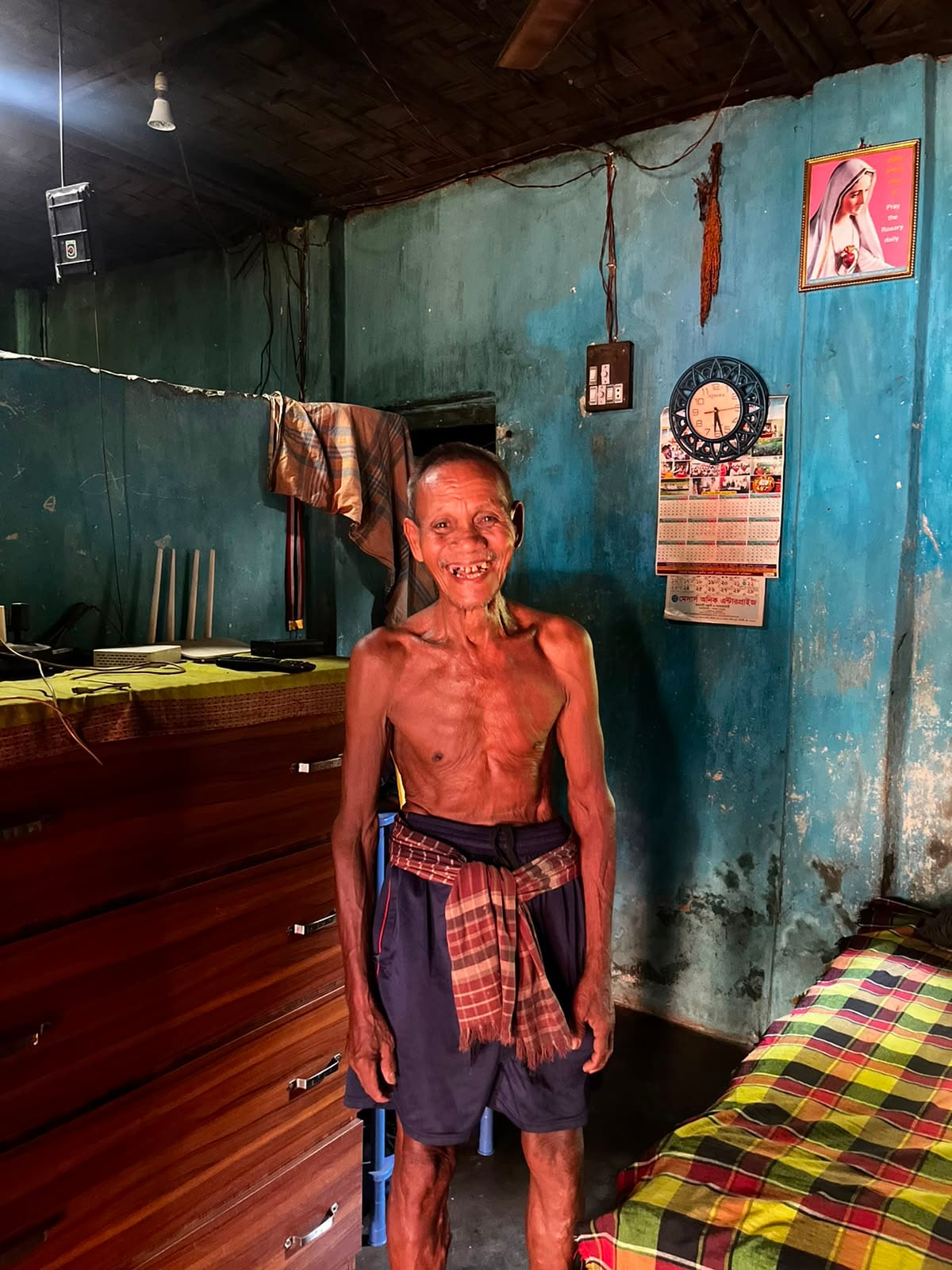
I visited another tea worker's house and I must say he makes the best tea, has the brightest smile and loves his wife unconditionally who passed away.
He gave me a tour inside his house, which is smaller than a room: living, dining, and kitchen in one place, with old plaster walls which held the memory of his loved one and a ceiling made from woven bamboo slats.
He didn't complain about his situation. He just gave a big smile which covered his cheeks. Maybe sometimes we are good at hiding our grief behind our smile.
As we requested him to pose for a picture, I noticed how malnourished he was. His ribcage was visible and he had a hunched back. This happens due to the heavy weight of the basket they carry for years and the lack of nutrition is due to having tea leaves and flatbread in their diet.
This makes me feel disgusted at myself because sometimes I do complain about the life Allah gave me. Indeed, we are the most ungrateful beings.
From that day till now, I tried to be grateful and find peace with any inconvenience I face in life. Truly, life humbles you with experience.
So now when I think about having tea, I think about the hands that pluck them, hands which are tied with barbed wires and a basket which carries the weight of life and responsibilities.
I think about the dreams that hide under the tea hat, the blood and sweat that gets soaked in the sun, lives that drown in uncertainty.
A Classroom That Changed My Perspective
My last destination was the Kurma school in the Kurma Tea Estate where we distributed over 200 packs of school supplies to the children, which was the main goal for our Dreams & Ink Project.
I have never been to a school in the rural areas of Bangladesh before. It was totally new for me, and I was super excited to meet the children, interact and learn something from them.
I even planned some activities with the children and as a teacher, I wanted them to enjoy, live, and remember the day for the rest of their lives.
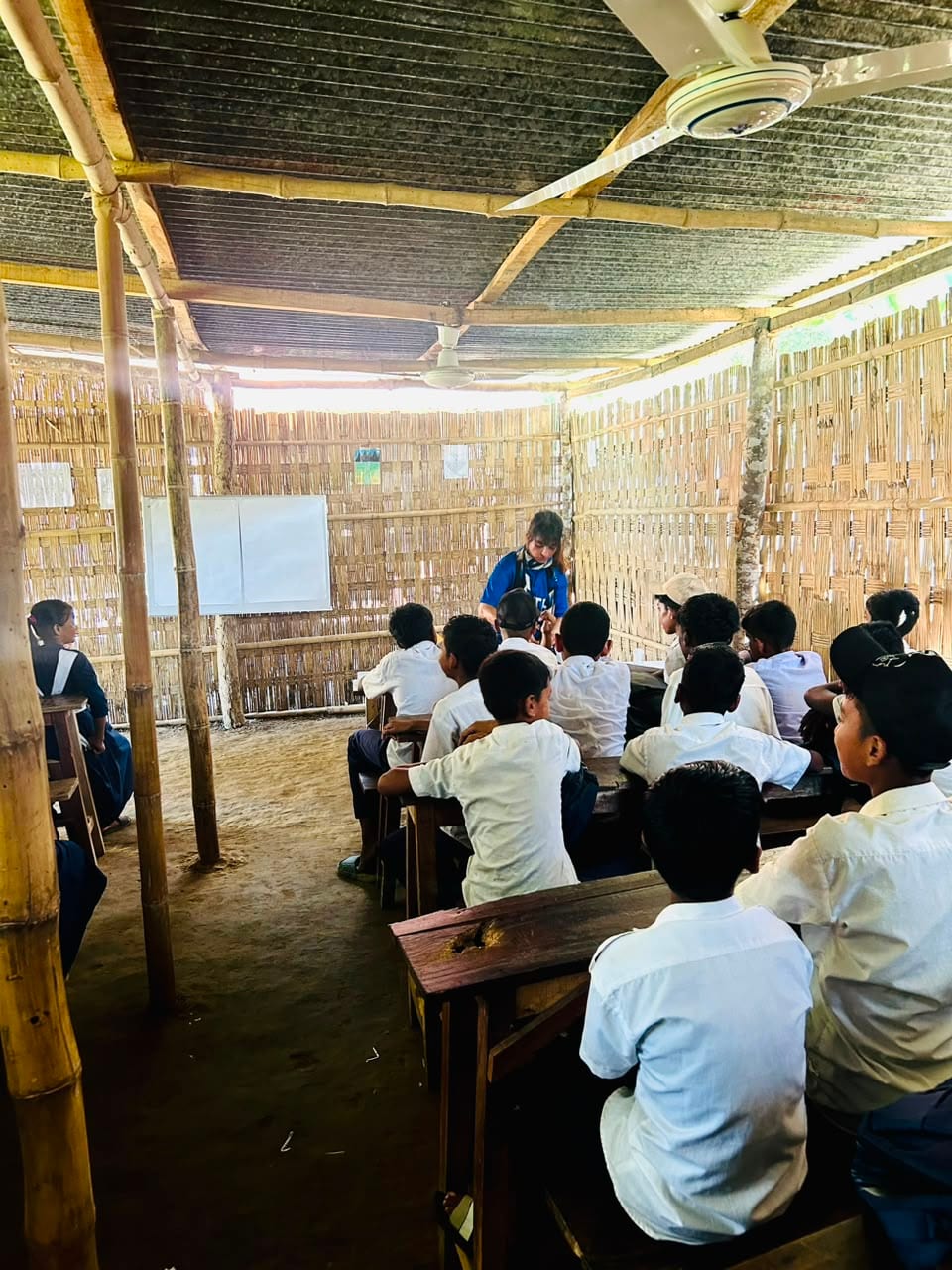
When we reached, the teachers welcomed us with open arms and the first thing that caught my sight was the classroom. As I stepped inside, my entire life changed.
Schools in Dhaka are so polished and every single classroom is air-conditioned and here the walls of the classroom were made of bamboo strips and the roof was constructed with metal sheets.
The classroom only had a fan which doesn't work properly and poor ventilation makes the inside temperature too high and unbearable.
Life feels unfair when you see that you live in one country but share two different worlds. Just imagine how these children do their classes in these extreme conditions.
Education: A Right or a Privilege?
The walls of the classroom were decorated with sketches and paintings made by the children, and as I was admiring them, I heard a voice saying, "That's my friend's drawing."
I looked back and saw two beautiful girls entering the classroom with braided hair, smiling and giggling, looking at each other.
It was time for the class and slowly the benches were filled with students. I just noticed innocent eyes staring at me with so much hope.
I stood there in silence for a while, then took over the floor and went off with the introductory phase, just like I do with my students on the very first day of school.
I asked some of them to share their school journey with me. I interviewed 3 girls, Surovi, Pahok, and Kartima.
Surovi said she enjoys studying and dreams of becoming a pilot and also promised to take me around the world in her flight. Despite the challenges, she values education and hopes for a better future where all children in her community can access learning and live better lives.
Pahok shared that she is deeply motivated to continue her studies and dreams of building a better life through education so she can make her parents proud and reduce their struggles.
Kartima shared that she wants to improve her character and become well-educated, always showing respect to her teachers while striving to achieve something meaningful in life.
Pahok and Kartima shared something that was concerning, which is that while they remain in school despite difficult learning conditions, many of their friends have dropped out or cannot attend regularly due to financial hardship, long distances, family struggles and therefore end up working in tea gardens.
While taking their interviews, I realised how broken the education sector in the tea garden is.
We all bonded very quickly and did some stamping activities with paint.
One of the students caught my attention as he was not in his uniform, and when I asked him, he said, "Madam, I have only one uniform and had to wash it today, so I had no other option but to wear my home clothes."
With deep regret in my heart, I just smiled and asked him if he would like to stamp the paper with paint.
He was excited and enjoyed the activity, so did the entire class.
I had an interactive session with them, got to know about their lives, dreams, ambitions, danced with them, watched them sing, laugh, play and enjoy the day.
Then we distributed the school supplies and to them, it was a priceless gift.
They found happiness in these little things and deeply cherished them.
I saw some of the children's notebooks and the amount of pages in them were not enough to take notes and the stationery items were very limited.
One of the teachers said that children barely come to school, and the dropout rate is pretty high due to their families' inability to pay their fees, afford school supplies and uniforms.
Another teacher during an interview mentioned how underpaid their job is. Their monthly pay is around BDT 3000 to BDT 5000 ($30 to $50).
They hardly get teachers' training and lack of teaching supplies and high student dropout rate make their teaching journey difficult.
So what is education actually? A Right or a Privilege?
The children's warm hugs and radiant smiles filled my heart with gratitude and for the first time in my life, my heart found peace.
These children gave me so much love, respect and warmth. They never complained about their life or their situation.
They just want to fulfill their dreams, become something in life and support their families so that they don't have to work in the tea gardens anymore.
The way they cried when we were leaving and requested us to come back still makes me tear up.
I hugged them tight one last time and promised them to come back again.
Finding the Fireflies
On my way back, I looked up at the sky and my eyes widened in awe. I saw glitters all over a black canvas. It looked like no less than a dream, thousands of dazzling stars following us. I was enthralled by this beauty.
Then it reminded me of the fallen stars of the tea gardens who deserved to stay up high but were dragged down.
We normalised their life, let them stay in that rabbit hole, depriving them of the life they truly deserved.
Unfortunately, we all are responsible for this and it's time we take the responsibility to give them their rights.
As I looked down, I suddenly saw something glowing in the dark.
"A firefly," I screamed!
Before I left for Sreemangal, I read somewhere that fireflies are going extinct and for the first time in my life, I saw one with my bare eyes. It is very important for us to keep them alive so that they can be the light in the darkness.
Don't you think this is also a reminder for us to save the fireflies of the tea gardens before they go extinct?